OSHA Electrical Outlet Labels ( 3 Things Auditors Hate)
Most people think OSHA inspections are for industrial or construction sites—but OSHA and NFPA safety codes apply to offices too, especially when it comes to electrical equipment. One of the most overlooked compliance gaps in small to mid-size business environments? OSHA electrical outlet labels and clearly marked wall switches, which are often missing or ignored.
In this article, you’ll learn:

- 3 common violations auditors cite during walk-throughs
- Why those issues matter under OSHA 29 CFR Part 1910 and NFPA 70E
- How a simple plug and switch labeling system helps resolve them before they’re flagged
1. Improper Use or Overloading of Electrical Outlets
Cited Regulation:
- OSHA 29 CFR §1910.303(b)(2) – Equipment shall be used according to instructions on its listing or labeling.
- NFPA 70E, Article 110.3(E) – Electrical hazards must be assessed and mitigated through labeling and signage.
Compliance Issue:
Auditors observe shared outlets being used for unauthorized personal devices, such as phone chargers or space heaters. They also note circuits drawing more wattage than rated capacity—a fire hazard.
Why They Flag It:
- Misuse of outlets violates equipment labeling standards
- No visible system to restrict access or usage
- Creates excessive current draw, increasing risk of arc faults or circuit overloads
Corrective Action:
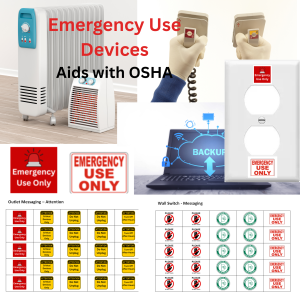
Apply OSHA Electrical Outlet Labels pre-printed labels such as:
- “Business Use Only” – prevents unauthorized personal devices
- “Max 1500 Watts” – reinforces capacity limits
- “Critical Device Only” – restricts shared outlet use to mission-critical tools
2. Unlabeled or Misidentified Wall Switches
Cited Regulation:
- OSHA 29 CFR §1910.303(f)(2) – Disconnecting means (including switches) must be clearly marked to indicate function.
- NFPA 70, Article 110.22 – All disconnects shall be legibly marked and durable.
Compliance Issue:
Wall switches powering outlets are not labeled, or staff are unaware of what the switch controls. In some cases, flipping a switch unexpectedly cuts power to essential devices like printers, signage, or network equipment.
Why They Flag It:
- Ambiguous switch usage can lead to unexpected shutoffs or equipment damage
- Suggests a lack of safe operating procedures around control systems
Corrective Action:
Label switches (OSHA Electrical Outlet Labels) with:
- “Do Not Turn Off”
- “Leave On”
Clear visual guidance ensures everyone understands what each switch controls—no guesswork.
3. Temporary, Improvised, or Illegible Labels
Cited Regulation:
- OSHA 29 CFR §1910.145 – Accident prevention signs and tags shall be uniform, legible, and visible.
- NFPA 70E, Article 130.5(H) – Labels must be field-marked and capable of withstanding the environment.
Compliance Issue:
Auditors find masking tape, sticky notes, or hand-drawn labels near outlets and switches—many of which are faded, peeling, or missing. These temporary solutions fail to meet OSHA’s labeling standards.
Why They Flag It:
- Labels are unreadable, inconsistent, or unprofessional
- They do not meet visibility or durability standards
- Suggests reactive, non-systematic safety management
Corrective Action:
Use a formal labeling system like Correct Switch – At Work that includes OSHA electrical outlet labels to aid with compliance
- Durable, Transparent stick on labels
- Pre-printed wording
- Clean visual indicators that hold up to wear and inspections
Bonus: The Compliance + Operational Win
Proper plug and switch labeling:
- ✅ Reduces audit risk
- ✅ Meets OSHA and NFPA visibility, clarity, and usage standards
- ✅ Helps team members make the right choice without extra training
- ✅ Eliminates repeated mistakes that slow down your workday
This small operational improvement can prevent compliance citations, downtime, and employee confusion—with just a few minutes of setup.
Audit-Ready Questions for Your Office
- Are your wall switches labeled to indicate what they control?
- Are any shared outlets being used for personal or high-wattage devices?
- Do your current labels meet OSHA’s requirements for clarity and permanence?
- Could someone easily unplug a critical device without realizing the impact?
- If OSHA or your local safety authority visited tomorrow, would you pass?
Fix It Before They Flag It
Stay audit-ready with a labeling system designed for small business safety and clarity.
👉 Get Correct Switch – At Work on Amazon
Avoid common citations. Improve team awareness. Label with confidence.