Shared Workspace Organization
Shared workspace organization is essential for maintaining flexibility, collaboration, and cost savings—but without the right systems, these environments can quickly become chaotic or unsafe. Whether you’re managing a co-working space, a satellite office, or an open-plan layout, these practical solutions help you maintain order, improve communication, and create an environment where everyone feels confident and equipped.
How Do You Keep a Shared Workspace Organized and Safe?
In spaces used by multiple teams or departments, clarity is key. These tools make it easy for everyone to understand their surroundings, reduce errors, and stay productive. Shared Workspace Organization covers a variety of areas. Let’s explore…

1. Wall Hooks, Lockers, or Mobile Storage Carts
Why it’s useful: Shared desks mean people need places to store their belongings. Wall hooks and rolling carts offer flexible, non-permanent options for storing bags, headphones, or notebooks.
2. Labeled Supply Stations
Why it’s useful: A communal supply area works best when it’s clearly organized. Use bins and labels to sort office essentials like pens, chargers, post-its, and cleaning wipes. Home Hints labels can bring clarity to even temporary or frequently moved storage zones.
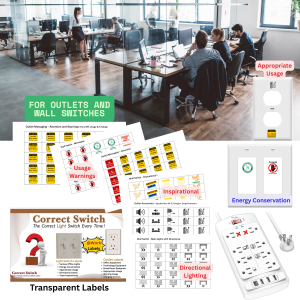
3. Correct Switch – Wall Switch & Outlet Labels
Why it’s useful: In shared spaces, people are often unfamiliar with which switches or outlets control what. Incorrect guesses can lead to unplugged devices or lights being turned off mid-meeting. Correct Switch provides icon-based, bilingual labels that work with any outlet or switch plate. The transparent version fits any office decor and reinforces smart, energy-conscious behavior. Get them at https://www.correctswitch.com/ or Amazon.
4. Desk Dividers or Acoustic Panels – (Shared Workspace Organization – Priority)
Why it’s useful: Create focused zones for work without sacrificing the open feel of a shared office. These lightweight barriers also reduce noise, contributing to a more productive and respectful environment.
5. Centralized Cleaning & Sanitation Station
Why it’s useful: Post-pandemic hygiene expectations are high. Make cleaning supplies visible and accessible, and include instructions or a checklist so everyone shares responsibility for wiping down surfaces and tech.
6. Digital Sign-In or Room Booking System
Why it’s useful: For hot-desking or reservable meeting rooms, a digital booking tool reduces conflict and confusion. Some systems even track usage patterns to help improve space planning.
7. Emergency Info & Wayfinding Signs – (Shared Workspace Organization – Priority)
Why it’s useful: Safety isn’t just about fire extinguishers. Clear signage for exits, restrooms, and emergency contacts ensures that both regulars and new visitors can navigate confidently.
8. Multi-Charger Stations or Power Towers – (Shared Workspace Organization – Priority)
Why it’s useful: Avoid competition for outlets by providing shared charging hubs in common areas. Label or color-code ports for easy identification and to minimize conflicts.
Final Thoughts
The best shared workspaces run on clarity and consistency. With tools like Correct Switch for labeling electrical points and Home Hints for organizing common areas, you can eliminate small frustrations that lead to bigger disruptions. These solutions don’t just keep things tidy—they support smoother collaboration and a safer, more inclusive workspace.
Related Articles